 Building value from the core
Building value from the core
Building value from the core
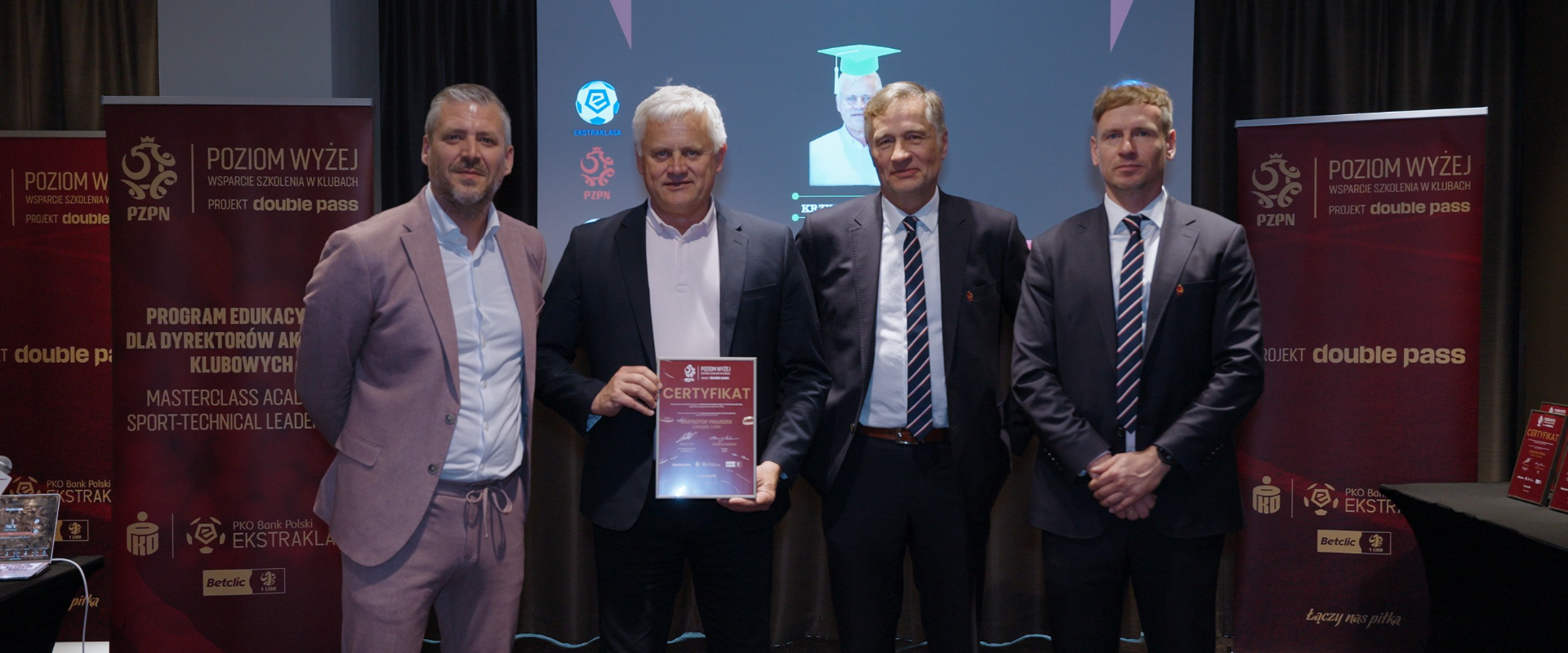
The program is part of the wider Double Pass project in Poland, a strategic, four-year collaboration launched in Warsaw in August 2025 and aimed at transforming talent development across Polish football. Signed on 24 June 2025 at PGE Narodowy, the agreement between Double Pass, the Polish Football Association (PZPN), and Ekstraklasa S.A. set in motion an ambitious initiative to raise the quality of academy environments by introducing international standards while adapting them to local realities, strengthening not only sporting outcomes but also the financial and organizational sustainability of clubs.
The overarching vision, as articulated at the project’s launch, is to create a self-sustaining national development system that increases the number of academy graduates reaching professional football, while reducing the loss of talent between youth and senior levels.
"We see even greater potential that needs to be unlocked. I am convinced that when we review the project in four years' time, we will be able to demonstrate tangible results, including a lower average age of players and an increased number of academy graduates making their debuts in the Ekstraklasa."
Marcin Animucki, President of Ekstraklasa S.A.,
The project is structured around four pillars: analysis and auditing, education and mentoring, certification, and tailored implementation. In practice, clubs first receive a clear diagnostic of their academy structures, followed by targeted education and strategic guidance, and ultimately a system of benchmarking and hands-on support to ensure long-term improvement. Ekstraklasa clubs are participating from the outset, with Betclic 1. Liga teams joining from 2027.
Within this framework, the Academy Directors Program has focused specifically on equipping club leaders with the tools to connect academy management, talent identification, recruitment, and football strategy into a coherent long-term model.
The final module was delivered on site with Sander Van Praet, Stig Meylemans, and Sune Smith-Nielsen working closely alongside participating academy directors. The focus of this closing stage was clear and forward-looking: Academy Management linked to Talent Identification & Recruitment, and the development of a coherent football strategy for each academy.
Participants engaged with strategic frameworks designed to translate long-term vision into practical club-level implementation. As the capstone of the program, each academy director presented a final project in the form of an Academy Performance Plan, tailored specifically to their club’s context and ambitions.
On Thursday 14 May, the closing ceremony of Phase 1 brought the cohort together to reflect on a year of intensive collaboration, learning, and exchange, a genuine milestone for everyone involved.
The success of Phase 1 was made possible through strong cooperation between key stakeholders, including PZPN (Polski Związek Piłki Nożnej) and Ekstraklasa S.A., alongside participating clubs, academy leaders, and a wide group of international experts. Their commitment and active engagement were central to the results achieved throughout this phase.
A wide network of football professionals contributed to the program’s development and delivery, including Koen Put, Joost Hendrickx, Hans Vander Elst, Zeb Jacobs, Peter Verbeke, Paul Nevin, Michael Beale, Steven Probst, Dean Rastrick, Arnar Vidarsson, Luis Martínez, and Gert Vande Broek.
The work is far from finished. The collaboration now moves into Phase 2, with sporting directors from Ekstraklasa clubs joining the program. This will be followed by a structured audit and analysis phase across participating clubs, designed to further refine academy structures, processes, and performance frameworks.
Exciting developments lie ahead as the project deepens its impact across Polish football academies and continues its long-term journey toward stronger talent pathways and more sustainable development ecosystems.
Onwards to Phase 2. 🚀
#FootballDevelopment #TalentIdentification #AcademyPerformance
The Double Pass Newsletter brings you the latest trends, innovations and developments in football and talent development, alongside stories and updates from our work across the global football ecosystem.